
Introducing: Southern Staples
Before we get started, I’d like to introduce you to Southern Staples – a series exploring the plants, crops, and landscapes that define the Southern US. Each week, I’ll pick a plant common to the South and dig into its history, growing tips, and how to enjoy it at the table.
Enter the Cherokee Purple Tomato
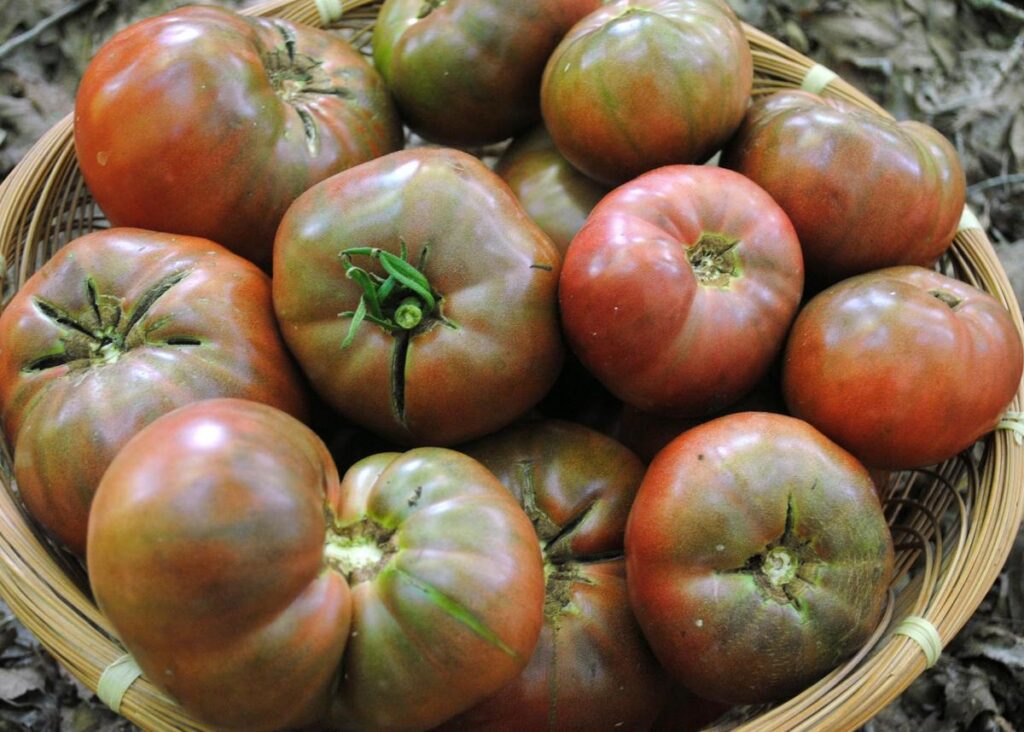
Photo courtesy of the Southern Exposure Seed Exchange
If there was a Southern Vegetable Hall of Fame, the Cherokee Purple Tomato would be in it. Matter of fact, it may very well be in the first class of inductees. Reason being: this tomato is more than just a vegetable, it has become a time capsule to the past.
While modern tomatoes have been bred for perfectly round, rock hard, consistency (I’m looking at you, Roma) and easy shipping – this variety maintains flavor, soul, diversity, and all things heirloom… and it has a kickass story that goes with it.
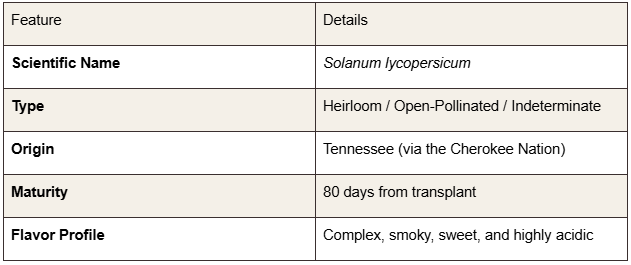
Cherokee Purple Details
The “Deep Roots” Story
The history of the Cherokee Purple is just as kickass as the fruit it bears, it’s a tale of neighbors, mystery, and a bit of botanical detective work.
The story begins in the rolling hills of Sevierville, Tennessee. In the late 1980s, a gardener named John Green received a handful of seeds from a neighbor. These weren’t your average hardware store seeds; they were a family heirloom. The neighbor shared a piece of oral history that would change gardening forever: she claimed these seeds had been in her family for over 100 years, having originally been gifted to them by the Cherokee people.
Think about that for a second. While the world was changing – through world wars, the industrial revolution, and the rise of the supermarket – this specific tomato was being quietly saved, year after year, in a Tennessee backyard.
In 1990, curious about what he actually had, Green mailed a packet of those seeds to Craig LeHoullier, a famed tomato expert in North Carolina (and author of the definitive book, Epic Tomatoes). When Craig grew them out, he didn’t see the bright, plastic-red fruit he was used to. Instead, he found a tomato that looked “bruised”—a deep, dusty, purple-maroon hue with shoulders that stayed a dark forest green.
Stunned by the complex, smoky flavor that put every other tomato to shame, Craig gave the variety its now-iconic name: Cherokee Purple. Its release sparked a revolution. It was the “gateway tomato” for the heirloom movement, proving to a generation of gardeners that “ugly” fruit – with its cracks, weird colors, and strange shapes – often carries a soul and a flavor that modern science simply cannot replicate. By planting this today, you aren’t just growing a vegetable; you’re keeping a century-old Tennessee handshake alive.
In the Dirt: Southern Growing Tips
Growing big beefsteak tomatoes in the South can be a gamble due to the humidity and “second summer” heat, but the Cherokee Purple is surprisingly resilient.
- Growing Zones: These are ideal for USDA Zones 7–10, which cover the American South and adjacent climate zones.
- Climate Resilience: While most popular varieties melt or shut down at 90°F, these produce through the “dog days” and handle intense humidity.
- Timing: Get these in the ground as soon as the danger of frost has passed. In the South, our goal is to get fruit set before the “pollen-killing” heat of mid-July.
- Soil & Nutrients: They are adapted to sandy or nutrient-poor soils common in the South. They love calcium; adding crushed eggshells or a handful of lime to the planting hole can help prevent Blossom End Rot.
- Support: These are indeterminate plants that grow into massive vines. Forget flimsy cone cages; use heavy-duty cattle panels or tall wooden stakes as these guys can get up to 9 feet tall.
- The “Ugly” Factor: Don’t be alarmed by “catfacing” (scarring at the bottom) or green shoulders on top. This is normal for the variety and doesn’t affect the taste!
The Harvest & Use: More Than Just a Salad Topper
You don’t cook a Cherokee Purple… at least, not at first. This is a “slicer” in its purest form, meant to be enjoyed raw, at room temperature, and preferably while standing over the kitchen sink with juice running down your chin.
The Southern Holy Trinity: The Tomato Sandwich
The classic preparation is sacred. You take two slices of white bread (the softer the better), a heavy schmear of Duke’s Mayo (and only Duke’s… let’s not be uncivilized), and a thick, slab-like slice of Cherokee Purple. Finish it with a pinch of flaky sea salt and cracked black pepper. It’s simple, it’s messy, and it’s arguably the best meal you’ll eat all summer.
Beyond the Sandwich: Recipe Ideas
While the sandwich is king, the complex, smoky sweetness of this heirloom plays well with others:
- The Heirloom Caprese: Because the interior is a deep, dark red with those signature green-gelled seed pockets, it looks stunning on a platter. Layer thick slices with fresh buffalo mozzarella and garden-fresh basil. Drizzle with a high-quality balsamic reduction. The acid in the vinegar makes the tomato’s smokiness pop.
- Southern Panzanella: If you have a few tomatoes that are getting a little too soft, cube them up and toss them with toasted chunks of cornbread, pickled red onions, and a light vinaigrette. The cornbread soaks up that “purple” juice like a sponge.
- The “Sun-Kissed” Toast: Rub a piece of crusty sourdough with a raw garlic clove, pile on mashed avocado, and top with a thick slice of Cherokee Purple and a drizzle of hot honey.
The Look
When you slice into a Cherokee Purple, you aren’t just seeing a vegetable; you’re seeing art. The flesh is dense and meaty with very little of the “watery” filler found in store-bought varieties. That deep maroon-to-brown interior contrasted against the green seed gel is the visual hallmark of a true Southern heirloom.
Seed Saving: Continuing the Legacy
Since this is an open-pollinated heirloom, you have the power to keep the story going. You can save the seeds from your best, most flavorful fruit this year to plant again next spring. By doing this, you aren’t just gardening; you’re participating in a 100-year-old tradition of seed stewardship.
Where to Buy a Piece of History
If you aren’t ready to save your own yet, you can still buy the “original” line. After Craig LeHoullier grew out those first mystery seeds in 1990, he sent the stock to the Southern Exposure Seed Exchange. They were the first to offer it commercially in 1993, and they remain the gold standard for sourcing this variety. Buying from them feels like a direct handshake with the history of the plant itself.
“A Cherokee Purple picked warm off the vine on a humid July afternoon is the closest thing to a religious experience a gardener can have.”